

Swiss Life launched its Solutions plan in May 1998, marking a revolutionary step forward for both th...
Swiss Life launched its Solutions plan in May 1998, marking a revolutionary step forward for both the company and the protection industry. It is a term-based range offering a number of flexible cover options for the personal, business and mortgage markets. Beforehand, Swiss Life offered separate standalone term assurance and critical illness plans.
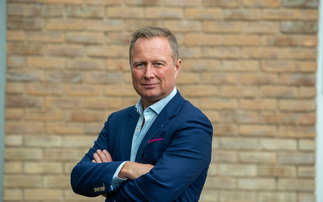
Simon Barwell, Swiss Life personal finance marketing manager, says: "The plan is made up of five basic products in three key areas - term assurance, critical illness, total permanent disability, accelerated life/critical illness and life/total permanent disability. These can be adapted for personal, business or mortgage protection. We were the first provider to take such a plan to the market and that led other providers to follow suit."
From the five given areas of cover, customers can choose additional benefits and mix and match the sums assured, take guaranteed or reviewable premiums and, in some cases, renewable benefits.
"The basic structure of the plan lies in those five areas. You can combine any of the elements together or take standalone parts. Altogether there are 143 variants from standard life cover onwards meaning that the product can be tailored to the individual."
Coverage
The plan covers 27 conditions, including diabetes mellitus and rheumatoid arthritis. It has improved upon the ABI model wording for heart valve replacement or repair by including coverage for keyhole surgery. It also offers cover for children and has minimal exclusions.
"There are minimal exclusions and we do not hide the ones that are left," says Barwell. Exclusions that apply would be critical illness or PTD resulting in failure to seek medical advice or if a claim arises from participation in an illegal activity.
"It is about adding value for the customer and empowering them to make decisions. We have tried to get rid of as many exclusions as possible by trying to determine why they are there in the first place. Then it is a case of continuing to work on them to see if they can somehow be eliminated," adds Barwell.
Flexibility
The plans flexible elements include:
l The option to increase/decrease the sum assured.
l The option to increase/decrease the length of the term.
l Guaranteed insurability options.
l Waiver of premium available.
l Indexed sum assured.
l The choice of guaranteed or reviewable premiums.
In addition, it was also one of the first plans on the market to offer critical illness as family income benefit.
"Benefits can be paid as a lump sum or through a continuous income stream across the three core areas," says Barwell. "Our key has been to look at what the customer wants. In some cases the customer will need a lump sum to pay off their mortgage. However, for many, a critical illness will mean that their condition will be ongoing, so they might need ongoing care themselves or need money to hire a nanny to look after the children. Again, it is about empowering the customer and giving them the option to choose."
Innovation
Swiss Life says it has always taken a proactive approach in terms of the development of its Solutions plan. The judges noted in particular the fact the plan is one of only two on the market to offer life cover buy-back (accelerated plans only) one year post CI claim.
"As a result of the OFT guidelines on healthcare we introduced life cover buy-back. Again, it is about flexibility. Imagine a scenario where you have taken out life and critical illness cover then suffer a heart attack. If you survive for one year after that then you have the option to buy back life cover at the same sum assured with no underwriting cost. It is a sad fact, but clients will often develop a sense of their own mortality when they suffer something as severe and life threatening as a heart attack, so we give them the opportunity to have life cover in place at the outset."
Other innovative features include fast track underwriting whereby Swiss Life cuts out the delay for both the client and the adviser. Normally, if a client fills out an application form and nothing is wrong then their insurer will issue a policy. If they wish to cover a fairly substantial sum then normally they will also have to meet certain medical criteria of which the insurer will require written verification from the client's GP.
"That all takes time," says Barwell, "so it is a case of speeding the process up and being in a position where we can, if a person is fit and healthy and below a certain sum assured, assume everything is okay and so cut down on the underwriting time.
The only hurdle is non-disclosure, but the fact that the application would then be fraudulent would result in non-payment anyway.
Tax planning
Other innovative features include the use of trust documents and free accidental death cover on cases up to £300,000 during underwriting, a feature Barwell says Swiss Life has already paid out on. He adds that the fundamental basis of a trust means that you no longer own or have control of the assets you place in it, such as real estate, stocks and bonds. But Swiss Life's trust documents are a carved out trust, he says, meaning benefits can go in either direction, so the client, if needed, can benefit immediately.
Barwell puts the success of Solutions down to a combination of how the plan is positioned in the market and the way it is designed and competitively priced. "In many ways, it is painful having such a successful product as we get so many requests. Ultimately it is a product that has been tailored to the needs of the IFA as well as the consumer. However, there is still a lot to do and areas in which we can improve. But if we can help the IFA then it can only be better for the market as a whole."