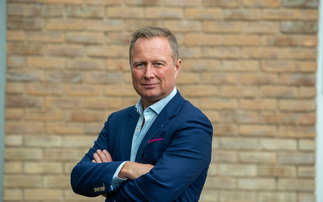


Axa PPP's Fergus Craig has a keen eye on PMI. Paul Robertson asks him how the market is improving.
Fergus Craig is the sort of chap who likes to dive right into a subject. No gentle testing of the waters for him.
A ridiculously bright man in an industry full of bright people, he is refreshingly direct in his approach to interview, making for an interesting half hour and, frankly, enough quote for a small book.
We kicked off with the big question: What is the main driver of the private medical insurance (PMI) market at the moment? Is it the NHS? Or is it the business environment? And what's holding it back?
"Business environment," said Axa PPP's commercial director. "Our view is that income is the largest determinant of whether or not people have PMI. If you look around at people who have PMI, they tend to be the people who have got the most money.
"So, the PMI market, I think, obviously does pretty well when the economy is going strongly. At the end of the day, if PMI were free or very cheap, everybody would have it, wouldn't they?
"As a secondary thing, I think the fact that the NHS has been doing OK, and has been perceived to be doing OK, is not helpful to the PMI market.
"I think we feel this year, like everybody else, a little bit pessimistic. Next year might be the nadir, but if we start to return to half-decent economic growth, in three or four years things could be OK again. The demand cycle will pick up and if we're honest, with the attempts to control public spending, the NHS might not look quite so smart."
NHS IMPACT ON PMI
It may be an obvious point that a reduction of faith in the NHS would increase PMI sales, but would it alter the product? If the NHS, for example, withdraws from certain areas, would that make PMI more important?
Craig has obviously been asked this before. "But it won't withdraw - not in a systematic way.
If anything, the way the government has behaved towards the National Institute for Health and Clinical Excellence (NICE) would indicate them putting responsibility for deciding what the NHS will and won't pay for on a more local level and reducing politicians' responsibility to some degree.
"If the NHS were to say: ‘Look, here's a lovely drug that improves people's survival a bit. But it costs an arm and a leg and a bit is not much. It's too expensive for the outcome so we're not paying for it' - and did that reasonably systematically - then there would be a big top-up market.
"But it's getting harder to envisage how that would work because it's going to vary a lot. It's fantastically inconvenient to try and think of a top-up product for, say, East Kent. From our perspective, if we were going to have top-ups, then it would be a lot more convenient if it were done on a national basis."